
When considering filing for bankruptcy, understanding the timeline of the process is crucial. From the initial consultation with a bankruptcy attorney to the completion of debtor education courses, each step plays a significant role in the overall timeline. This article will provide an in-depth look at the key stages of the bankruptcy filing process and how long each step typically takes.
Table of Contents
Key Takeaways
- The bankruptcy filing process involves several key stages, including the initial consultation, gathering financial documents, credit counseling, and filing the bankruptcy petition.
- The automatic stay provides immediate relief by halting creditor actions upon filing for bankruptcy.
- Creditors must be notified of the bankruptcy filing to ensure they comply with the automatic stay.
- The 341 meeting, also known as the Meeting of Creditors, is a crucial step where the debtor meets with creditors and the trustee to discuss the bankruptcy case.
- Completion of debtor education and financial management courses is essential for a successful bankruptcy discharge.
Bankruptcy Filing Process Overview
Initial Consultation with Bankruptcy Attorney
The journey through bankruptcy begins with an initial consultation with a bankruptcy attorney. This critical first step involves discussing your financial situation in detail, exploring the types of bankruptcy for which you may qualify, and understanding the implications of filing for bankruptcy.
The goal of this consultation is to provide you with a clear path forward. It’s an opportunity to ask questions, address concerns, and gain insight into the bankruptcy process tailored to your unique circumstances.
During the consultation, you can expect to cover several key topics:
- The differences between Chapter 7 and Chapter 13 bankruptcy
- The potential impact on your credit score and assets
- The costs associated with filing for bankruptcy
It’s essential to come prepared with a comprehensive list of your debts, assets, and income to make the most of this consultation.
Gathering Required Financial Documents
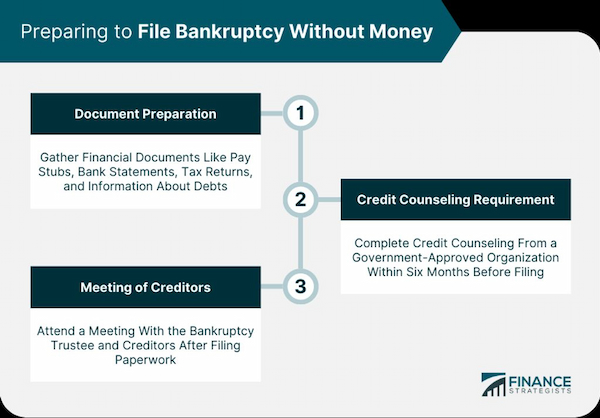
The process of gathering required financial documents is a critical step in preparing for bankruptcy. You will need to compile a comprehensive list of your financial history, including assets, debts, income, and expenses. This documentation will form the backbone of your bankruptcy petition and is essential for your attorney to provide accurate advice and prepare your case.
Documentation is key to a successful bankruptcy filing. The following is a list of documents you should begin to collect:
- Tax returns for the last two years
- Pay stubs or other proof of income for the last six months
- Bank statements
- Statements for any loans or credit cards
- Investment records
- Property deeds and vehicle titles
It’s important to be thorough and honest when collecting your financial documents. Incomplete or inaccurate information can lead to delays or complications in your bankruptcy case.
Remember, the goal is to provide a clear picture of your financial situation. Your attorney will use these documents to help determine the best course of action for your bankruptcy filing.
Pre-Filing Credit Counseling
Before filing for bankruptcy, individuals are required to complete a session of pre-filing credit counseling. This step is crucial as it helps to ensure that bankruptcy is indeed the most suitable option for the debtor’s financial situation. The counseling must be done with an approved agency, like the ACCC, which is recognized for providing this service.
The goal of the counseling session is to provide an evaluation of personal finances and discuss potential alternatives to bankruptcy. It typically covers topics such as budgeting, financial management, and the consequences of bankruptcy. The session must be completed within 180 days before filing the bankruptcy petition.
- Determine if bankruptcy is the right choice
- Complete counseling with an approved agency
- Receive a certificate of completion
It’s essential to approach this counseling with an open mind and willingness to explore all possible financial avenues. The insights gained can be invaluable in making an informed decision about whether to proceed with bankruptcy.
Preparing and Filing Bankruptcy Petition
Once all the necessary financial documents are gathered, the next step is to prepare the bankruptcy petition. This document is critical as it includes all pertinent information regarding your debts, assets, income, and expenses. The accuracy of this petition is paramount, as it forms the basis of your bankruptcy case.
Bankruptcy petitions are complex and require attention to detail. It’s advisable to work with a bankruptcy attorney to ensure that the petition is prepared correctly. The attorney will also guide you through the process of filing the petition with the bankruptcy court.
- Review all gathered financial documents
- Complete the bankruptcy petition form
- File the petition with the bankruptcy court
Filing the bankruptcy petition initiates the legal process and provides immediate relief through an automatic stay, which halts most collection actions against you by creditors.
It’s important to note that any errors or omissions in the bankruptcy petition can lead to delays or even dismissal of your case. Therefore, it’s essential to double-check all information and ensure that everything is up to date before submission.
Automatic Stay and Creditor Notifications

Understanding Automatic Stay
Upon filing for bankruptcy, an automatic stay is immediately put into place. This legal provision halts most creditors from continuing with collection actions against the debtor. The automatic stay is designed to provide a period of relief, allowing debtors to work on their financial reorganization without the pressure of impending lawsuits, wage garnishments, or harassing phone calls.
Automatic stay impacts various types of debts differently, and certain actions are not stopped by it. For example, criminal proceedings, child support collection, and paternity suits are not affected by the automatic stay.
The automatic stay is a powerful tool for debtors, offering a temporary reprieve from financial pressures as they navigate the bankruptcy process.
Here are some of the actions that are typically halted by the automatic stay:
- Collection calls and letters
- Foreclosure proceedings
- Eviction actions
- Utility disconnections
- Wage garnishments
- Repossession of property
It’s important for debtors to understand that the automatic stay is temporary and creditors may seek relief from the stay from the court. If granted, the creditor can resume collection activities.
Notifying Creditors of Bankruptcy Filing
Once the bankruptcy petition is filed, an important step is to notify all creditors of the ongoing process. This is typically handled by the court clerk, who sends out notices to all creditors listed in the bankruptcy schedules. Timely notification is crucial as it ensures that creditors are aware of the automatic stay and cease any collection activities.
Creditors receive a notice that includes the date set for the meeting of creditors, also known as the 341 meeting, and deadlines for challenging the debtor’s discharge or the repayment plan. It’s essential for the debtor to list all creditors accurately to avoid any disputes or delays in the bankruptcy proceedings.
- Ensure all creditor information is accurate and up-to-date.
- Verify that the court clerk has the correct mailing addresses for all creditors.
- Keep a record of all notices sent out by the court clerk.
The effectiveness of the bankruptcy process is often contingent on the thoroughness of the creditor notification step. Inadequate or incorrect notifications can lead to complications that may affect the outcome of the bankruptcy case.
Meeting of Creditors (341 Meeting)

Purpose of 341 Meeting
The primary purpose of the 341 Meeting, also known as the Meeting of Creditors, is to allow the bankruptcy trustee and creditors to question the debtor under oath regarding their financial affairs and the documents filed in the bankruptcy case. This meeting is a crucial step in the bankruptcy process, as it provides an opportunity for the parties to resolve any discrepancies or issues.
Transparency is key during the 341 Meeting, as it ensures that all parties have a clear understanding of the debtor’s financial situation. The debtor must be prepared to answer questions honestly and provide any additional documentation that may be requested.
- The debtor must attend the meeting.
- Creditors may attend, but it is not mandatory.
- The bankruptcy trustee will preside over the meeting.
The 341 Meeting is not a court hearing, but it is a legal proceeding that requires the debtor’s attendance and cooperation.
What to Expect at the Meeting
During the 341 Meeting, also known as the Meeting of Creditors, debtors will meet with the bankruptcy trustee and any creditors who choose to attend. This meeting is a pivotal part of the bankruptcy process where debtors must answer questions regarding their financial affairs and the documents submitted in their case.
Be prepared to verify your identity and answer questions under oath. Your bankruptcy attorney will be present to assist you, but they cannot answer for you. It’s important to be honest and thorough in your responses to ensure a smooth proceeding.
- Confirm your identity and social security number.
- Answer the trustee’s questions about your bankruptcy forms and finances.
- Address any creditor concerns or objections.
The 341 Meeting is an opportunity for creditors to challenge the dischargeability of debts. It’s essential to approach this meeting with a clear understanding of your financial situation and the information presented in your bankruptcy petition.
Remember, the goal of the meeting is to provide clarity and transparency in your financial status, not to intimidate or harass you. With the right preparation, you can navigate this step with confidence.
Creditors’ Objections and Plan Confirmation

Addressing Creditors’ Objections
When a creditor objects to a bankruptcy filing, it can add complexity to the process. Creditors may file objections to the discharge of debts, asserting that certain debts should not be eliminated due to fraud or other disqualifying factors. It’s essential for debtors to respond to these objections promptly and effectively.
Creditors’ objections are not uncommon, especially in Chapter 7 cases. According to the Bruce Law Firm, an objection to discharge is often filed by an attorney hired by the Trustee assigned to your case. The Trustee’s attorney will oppose the discharge if they believe there has been any improper conduct.
The resolution of objections often involves negotiation and legal arguments. It’s crucial for debtors to have knowledgeable representation during this phase to protect their interests.
The following steps outline how to address creditors’ objections:
- Review the objection notice for specific claims.
- Gather evidence and documentation to refute the claims.
- Consult with your bankruptcy attorney for legal advice.
- Attend any required court hearings to present your case.
Confirmation of Bankruptcy Plan
Once the bankruptcy plan is formulated, it must be confirmed by the court. Confirmation is a critical step as it signifies the court’s approval of the plan’s terms and the debtor’s commitment to abide by them. The plan outlines how creditors will be repaid over time, and its confirmation sets the stage for the debtor’s financial recovery.
Confirmation of the bankruptcy plan involves a detailed review by the court to ensure that the plan is fair and feasible. If the plan meets all legal requirements and the court approves it, the debtor will begin making payments according to the plan’s schedule.
The confirmation of the bankruptcy plan is a moment of relief for debtors, as it marks the beginning of their journey towards financial stability.
Following confirmation, debtors must adhere to the plan’s terms to successfully complete the bankruptcy process. Failure to make the required payments can lead to dismissal of the bankruptcy case or conversion to a different chapter of bankruptcy.
Debtor Education and Financial Management Course

Completion of Debtor Education Course
Upon completing the debtor education course, individuals are equipped with valuable financial management tools. These tools are designed to help prevent future financial distress. Completion of this course is a prerequisite for the discharge of debts in bankruptcy.
The course covers a range of topics, including budgeting, using credit wisely, and managing money effectively. It’s essential for debtors to apply these lessons to their daily lives to ensure long-term financial stability.
The debtor education course is not just a formality; it’s a critical step in rebuilding financial health.
Key benefits of the debtor education course include:
- Improved understanding of financial planning
- Strategies for avoiding future debt
- Insights into responsible credit use
Importance of Financial Management Course
Completing the financial management course is not just a formality; it’s a crucial step in ensuring long-term financial stability post-bankruptcy. The knowledge gained can significantly influence a debtor’s future financial decisions, helping to avoid the pitfalls that led to bankruptcy in the first place.
Financial management skills are essential for creating a sustainable budget, understanding credit, and making informed financial choices. This course provides the tools necessary for debtors to rebuild their financial foundation.
- Understand and manage personal finances
- Develop a realistic budget
- Set financial goals
- Learn strategies to handle financial stress
The successful completion of this course is imperative for a fresh financial start and is a requirement before any bankruptcy discharge can be granted.
Conclusion
In conclusion, understanding the bankruptcy filing timeline is crucial for individuals and businesses navigating financial difficulties. The process duration can vary depending on the type of bankruptcy, complexity of the case, and court procedures. It is important for filers to be aware of the key milestones and requirements to ensure a smooth and efficient bankruptcy process. By being informed and prepared, individuals and businesses can better manage their financial challenges and work towards a fresh start.
Frequently Asked Questions
What is the timeline for the bankruptcy filing process?
The timeline for the bankruptcy filing process can vary depending on the type of bankruptcy and individual circumstances. Generally, it can take several months to complete.
How long does the automatic stay last?
The automatic stay typically lasts throughout the bankruptcy process, providing immediate relief from creditor actions.
What documents are required for filing bankruptcy?
Commonly required documents include proof of income, list of assets and liabilities, recent tax returns, and financial statements.
What happens at the Meeting of Creditors (341 Meeting)?
At the 341 Meeting, the debtor meets with the trustee and creditors to review the bankruptcy petition and answer any questions under oath.
How are creditors notified of the bankruptcy filing?
Creditors are notified through official court notices and mailings from the bankruptcy court.
Can creditors object to the bankruptcy plan?
Yes, creditors have the right to object to the bankruptcy plan if they believe it does not comply with bankruptcy laws or is unfair to them.
What is the importance of completing the debtor education course?
The debtor education course is mandatory and aims to provide financial management skills to help debtors make informed decisions and prevent future financial difficulties.
How long does it take to confirm a bankruptcy plan?
The confirmation of a bankruptcy plan can vary, but it typically occurs within a few months after filing, depending on the complexity of the case.