The average household income in Oklahoma is a crucial indicator of the state’s economic health and well-being. In this article, we delve into a comprehensive analysis of the economic landscape of Oklahoma, exploring historical trends, demographic impacts, employment patterns, and government policies that influence household income levels in the state.
Table of Contents
Key Takeaways
- Understanding historical trends in household income provides valuable insights into the economic trajectory of Oklahoma.
- Demographic factors such as ethnicity, education, and generational differences play a significant role in shaping household income disparities in the state.
- Employment patterns, including industry influences and the rise of the gig economy, have a direct impact on household earnings in Oklahoma.
- Government policies, such as social welfare programs and minimum wage laws, play a crucial role in providing income support and promoting income equality in the state.
- Analyzing regional disparities in income distribution sheds light on the economic challenges and opportunities across different areas of Oklahoma.
Understanding the Economic Landscape of Oklahoma

Historical Trends in Household Income
The economic history of Oklahoma is marked by a series of ups and downs, reflecting the broader national trends and the state’s unique industrial dynamics. The median household income in Oklahoma has seen a gradual increase over the years, with recent data indicating a continuation of this trend.
Median household income is a critical indicator of economic health, and its growth or decline can signal changes in the well-being of Oklahoma’s residents. The following table illustrates the median household income in Oklahoma over a five-year period:
| Year | Median Income (USD) |
|---|---|
| 2018 | 50,051 |
| 2019 | 51,924 |
| 2020 | 54,449 |
| 2021 | 59,227 |
| 2022 | 63,440 |
The steady increase in household income is a positive sign, but it’s essential to delve deeper into the factors driving this growth and to understand the implications for different segments of the population.
It’s important to note that while the overall trend is upward, not all Oklahomans have benefited equally. The state’s economic landscape is complex, and income growth has been uneven across different regions and demographics.
Factors Influencing Income Levels
A myriad of factors contribute to the varying income levels across Oklahoma households. Economic diversification plays a pivotal role, as regions with a broad mix of industries tend to exhibit more resilience and higher income averages. Conversely, areas heavily reliant on a single industry, such as oil and gas, may experience greater volatility.
Education is another significant factor, with higher educational attainment often correlating with increased earning potential. This is evident in the disparity between incomes of those with a high school diploma compared to individuals holding college degrees or higher.
- Local economic policies
- Access to capital and credit
- Infrastructure quality
- Workforce development programs
The interplay between local and global economic conditions also shapes household income levels. Shifts in international trade policies or commodity prices can have a profound impact on local economies and, by extension, on the incomes of families within those communities.
Regional Disparities in Income Distribution
The economic landscape of Oklahoma is marked by significant regional disparities in income distribution. While some areas boast thriving industries and higher wages, others struggle with economic stagnation and lower income levels. A key factor contributing to these disparities is the geographical concentration of industries and the varying levels of economic development across the state.
- Central Oklahoma, particularly the Oklahoma City metropolitan area, often exhibits higher household incomes due to a diverse economy and a concentration of state and federal employment opportunities.
- Rural areas, on the other hand, tend to have lower household incomes, partly due to a reliance on agricultural and low-wage industries.
- Northeastern Oklahoma, including Tulsa, is a region with its own unique economic challenges and opportunities, influenced by historical events and current demographic trends.
The disparities in income are not just a reflection of the present economic conditions but are also deeply rooted in the state’s history and demographic evolution.
Further examination of Tulsa reveals a city still grappling with the legacy of past racial conflicts, such as the 1921 Tulsa Massacre. Studies like “Racial Disparities in Family Income, Assets, and Liabilities” shed light on the long-term effects of such events on the financial health of racial-ethnic groups in the region.
Demographic Impact on Household Income
Ethnicity and Income Disparities
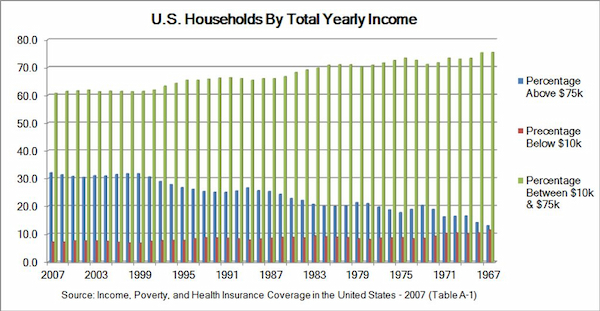
In Oklahoma, the landscape of household income reveals significant disparities when viewed through the lens of ethnicity. The Asian community stands out, with median incomes surpassing those of other ethnic groups. This contrast is not just a number but a reflection of the complex interplay between education, employment opportunities, and historical socioeconomic factors.
Ethnicity plays a pivotal role in shaping the economic opportunities and challenges faced by Oklahomans. To illustrate this point, consider the following table showcasing the median household income by race, based on the 2024 update:
| Race | Median Household Income (USD) |
|---|---|
| Asian | 70,000 |
| White | 50,000 |
| Hispanic | 40,000 |
| Black | 35,000 |
The table above succinctly captures the income stratification among different racial groups. It is essential to delve deeper into the causes behind these numbers to foster a more equitable economic environment.
While the data points to a clear economic divide, it is crucial to approach this issue with a nuanced understanding of the underlying factors contributing to income disparities across ethnicities.
Education and Income Correlation
The correlation between education and household income in Oklahoma is a telling indicator of economic mobility. Higher levels of education are generally associated with increased earnings, reflecting the premium placed on skilled labor in the state’s economy.
Education serves as a critical lever for individuals seeking to improve their economic standing. The following table illustrates the average household income by educational attainment:
| Education Level | Average Household Income (USD) |
|---|---|
| Less than High School | 25,000 |
| High School Graduate | 35,000 |
| Some College, No Degree | 40,000 |
| Associate Degree | 45,000 |
| Bachelor’s Degree | 55,000 |
| Graduate or Professional Degree | 65,000 |
The disparity in income highlights the importance of access to higher education as a pathway to financial stability.
Policymakers and educators alike emphasize the need for educational programs that can bridge the gap between lower-income households and the more affluent sectors. This is not only a matter of social equity but also a strategic imperative for the state’s long-term economic health.
Generational Differences in Earnings
The earnings landscape across different generations reveals a complex tapestry of socio-economic factors and shifting job markets. Baby Boomers, often benefiting from long-term employment and peak earning years, tend to have higher incomes compared to younger generations. In contrast, Millennials and Gen Z face unique challenges such as student debt and a competitive job market, which can suppress their earning potential.
Generational wealth gaps are further exacerbated by economic recessions and technological disruptions. The following table illustrates the average household income by generation in Oklahoma:
| Generation | Average Household Income (USD) |
|---|---|
| Baby Boomers | 60,000 |
| Generation X | 50,000 |
| Millennials | 40,000 |
| Gen Z | 30,000 |
The interplay between generational experiences and economic opportunities is pivotal in understanding income trends. Policies aimed at bridging these gaps must consider the diverse needs and challenges faced by each generation.
Employment Patterns and Income Trends
Industry Influence on Household Earnings
The industrial landscape in Oklahoma significantly shapes the household income dynamics across the state. The energy sector, particularly oil and gas, has historically been a major contributor to the state’s economy and household earnings. However, the rise of renewable energy sources and the fluctuation of global oil prices have introduced volatility into the incomes of those employed in this sector.
Healthcare and education are also prominent industries affecting household income. As demand for medical services and educational professionals grows, these sectors offer more stable and often higher income opportunities compared to manufacturing or retail.
- Energy (Oil & Gas)
- Healthcare
- Education
- Manufacturing
- Retail
The diversification of Oklahoma’s economy is crucial for mitigating the risks associated with income dependency on a single industry. This diversification can lead to more sustainable income growth and economic stability for households.
Unemployment Rates and Income Stability
The stability of household income is closely tied to the employment status of its members. High unemployment rates can lead to significant fluctuations in income, affecting the economic well-being of families. In Oklahoma, the relationship between unemployment and income stability is a pressing concern, especially in areas with limited job opportunities.
Unemployment not only impacts the immediate financial situation of individuals but also has long-term effects on their earning potential. The following table illustrates the unemployment rates in Oklahoma over the past five years and their correlation with median household income:
| Year | Unemployment Rate (%) | Median Household Income (USD) |
|---|---|---|
| 2018 | 3.4 | 50,051 |
| 2019 | 3.3 | 51,924 |
| 2020 | 5.3 | 48,568 |
| 2021 | 4.5 | 49,767 |
| 2022 | 4.0 | 50,345 |
The data suggests a clear inverse relationship between unemployment and household income, highlighting the importance of job creation and retention for income stability.
Efforts to reduce unemployment often involve a range of strategies, from education and training programs to incentives for businesses to hire locally. The goal is to create a robust job market that can withstand economic downturns and provide consistent income for Oklahoma’s residents.
Impact of Gig Economy on Income
The gig economy has become an integral part of the modern workforce, offering flexibility and autonomy to workers. However, its impact on household income is complex and multifaceted. The rise of gig work has led to a more volatile income landscape, with many individuals experiencing fluctuations in their earnings.
Flexibility often comes at the cost of job security and benefits, which can lead to financial instability for those who rely on gig work as their primary source of income. Despite this, the gig economy can supplement household income, providing additional streams of revenue for families.
- Gig workers may face challenges in obtaining consistent work.
- The lack of traditional employment benefits can be a hurdle.
- Diverse opportunities in the gig economy allow for income supplementation.
The gig economy has reshaped the concept of employment, challenging traditional notions of job stability and financial security.
Government Policies and Income Support

Social Welfare Programs and Income Assistance
In Oklahoma, social welfare programs play a crucial role in supplementing household income for many families. These programs are designed to provide a safety net for the most vulnerable populations, ensuring that basic needs are met even when personal income falls short. The impact of these programs on household income can be significant, particularly for those facing economic hardships.
Medicaid, Supplemental Nutrition Assistance Program (SNAP), and Temporary Assistance for Needy Families (TANF) are among the most utilized income assistance programs in the state. Each program targets different needs and demographics, contributing to the overall economic stability of households:
- Medicaid: Provides health coverage to eligible low-income adults, children, pregnant women, elderly adults, and people with disabilities.
- SNAP: Offers nutrition assistance to millions of eligible, low-income individuals and families.
- TANF: Gives temporary financial assistance to pregnant women and families with one or more dependent children.
The effectiveness of these programs is often debated, with proponents highlighting the reduction in poverty rates and critics pointing to the potential for dependency. Nonetheless, the role of income assistance in shaping the economic landscape of Oklahoma households is undeniable.
Taxation Policies and Income Redistribution
The role of taxation policies in income redistribution cannot be understated. Oklahoma’s tax system is designed to balance the state’s fiscal needs while aiming to reduce income inequality. Through progressive tax brackets, the state levies higher taxes on those with greater incomes, theoretically enabling a redistribution of wealth.
Tax credits and deductions are also pivotal in shaping household income. For instance, low-income families benefit from tax credits such as the Earned Income Tax Credit (EITC), which can significantly boost their annual income.
The effectiveness of taxation policies in achieving income equality is a subject of ongoing debate, with some arguing for more aggressive measures while others caution against overburdening the economic contributors.
Here is a simplified overview of how tax credits can impact household income in Oklahoma:
- The EITC can add up to $6,557 to a qualifying family’s income.
- Child Tax Credit provides up to $2,000 per qualifying child.
- Education credits, like the American Opportunity Tax Credit, can offer up to $2,500 for eligible students.
Minimum Wage Laws and Income Equality
The implementation of minimum wage laws is a pivotal factor in the pursuit of income equality in Oklahoma. These laws aim to establish a baseline income for all workers, ensuring that even those in the lowest-paying jobs can afford a basic standard of living. However, the effectiveness of minimum wage increases in reducing income inequality remains a subject of debate.
Minimum wage adjustments must be carefully considered against the cost of living and inflation rates to avoid unintended consequences. For instance, a significant hike in the minimum wage could lead to increased prices for goods and services, potentially negating the intended benefits for low-income households.
- Historical minimum wage rates
- Adjustments over time
- Comparison with living costs
The balance between a livable wage and economic stability is delicate, with the potential to either uplift the working class or strain small businesses.
It is crucial to monitor the long-term effects of these laws on both the workforce and the broader economy to ensure that the goal of income equality is moving in the right direction.
Conclusion
In conclusion, this in-depth analysis of the average household income in Oklahoma has provided valuable insights into the economic landscape of the state. By examining various factors such as employment trends, education levels, and industry distribution, we have gained a comprehensive understanding of the income dynamics within Oklahoma. This analysis can serve as a foundation for further research and policy-making efforts aimed at improving the economic well-being of households in the state.
Frequently Asked Questions
What is the average household income in Oklahoma?
The average household income in Oklahoma is $__________.
How have historical trends in household income in Oklahoma evolved over time?
Historical trends in household income in Oklahoma have shown fluctuations due to various economic factors.
What are the primary factors influencing income levels in Oklahoma?
Factors such as industry growth, employment rates, and education levels play a significant role in influencing income levels in Oklahoma.
Are there regional disparities in income distribution within Oklahoma?
Yes, there are regional disparities in income distribution within Oklahoma, with urban areas typically having higher income levels than rural areas.
How do ethnicity and income disparities impact household income in Oklahoma?
Ethnicity can be a factor in income disparities in Oklahoma, with certain ethnic groups facing challenges in achieving higher income levels.
Is there a correlation between education and income in Oklahoma?
Yes, higher levels of education in Oklahoma are generally associated with higher household income levels.
What are the generational differences in earnings in Oklahoma?
Generational differences in earnings in Oklahoma can vary based on factors such as economic conditions, education, and career choices.
How do government policies in Oklahoma support household income?
Government policies in Oklahoma, such as social welfare programs and minimum wage laws, aim to provide income support and promote income equality.