
The ideal cap rate for single family homes is a crucial factor in real estate investment decisions. Understanding cap rate, calculating it accurately, and interpreting its implications are essential for investors seeking profitable opportunities. This article explores the concept of cap rate for single family homes, its calculation, interpretation, market trends, risk assessment, comparison with other metrics, and its role in real estate investment strategies.
Table of Contents
Key Takeaways
- Cap rate is a measure of the return on investment for a single family home.
- Factors affecting cap rate include property location, operating expenses, and market conditions.
- Interpreting high and low cap rates helps in assessing investment risk and potential returns.
- Cap rate is a valuable tool for comparing different investment opportunities in real estate.
- Incorporating cap rate in investment strategies and property valuation enhances decision-making and risk management.
Understanding Cap Rate for Single Family Homes
What is Cap Rate?
Cap Rate, or Capitalization Rate, is a fundamental metric in real estate investment, particularly for single family homes. It represents the rate of return on a real estate investment property based on the income that the property is expected to generate. The Cap Rate is calculated by dividing the property’s annual net operating income (NOI) by its current market value or purchase price.
To put it simply, the Cap Rate is a tool used to assess the profitability and potential return of a real estate asset. It is particularly useful for comparing the relative value of properties in different markets or segments. A higher Cap Rate implies a potentially higher return on investment, but it may also indicate a higher risk.
Tip: When evaluating properties, consider the Cap Rate as a snapshot of the investment’s performance at a given moment. It is essential to look at this metric in conjunction with other factors to get a comprehensive understanding of the property’s potential.
Factors Affecting Cap Rate
Factors that affect the cap rate of single family homes include location, property condition, and local market demand. Location plays a crucial role in determining the cap rate, with high-demand areas often commanding lower cap rates. Property condition also influences the cap rate, as well-maintained homes may have lower cap rates due to lower maintenance costs. Additionally, local market demand can impact the cap rate, with high demand leading to lower cap rates. Consider the following factors when evaluating the cap rate:
- Location
- Property Condition
- Local Market Demand
Tip: Understanding the interplay of these factors is essential for accurately assessing the cap rate and making informed investment decisions.
Importance of Cap Rate
The capitalization rate, or Cap Rate, is a fundamental metric in real estate investment, serving as a beacon for gauging profitability and risk. It is essential for investors to understand the importance of Cap Rate as it directly influences investment decisions.
Cap Rate offers a snapshot of a property’s potential return on investment (ROI) by comparing the income it generates to its purchase price. This ratio is particularly valuable because it provides a quick comparative tool for different real estate investments. For instance, a higher Cap Rate may indicate a potentially more profitable investment, but it also often signals higher risk.
Investors should not rely solely on Cap Rate; it is one of many tools used to assess the viability of a real estate investment. It is crucial to consider Cap Rate in conjunction with other financial metrics and market analyses to gain a comprehensive understanding of an investment’s potential.
Tip: Always cross-reference Cap Rate with current market trends and property-specific factors to ensure a well-rounded investment strategy.
Calculating Cap Rate

Formula for Cap Rate
The formula for calculating the Cap Rate (Capitalization Rate) is relatively straightforward. It is the ratio of a property’s Net Operating Income (NOI) to its current market value or purchase price. Here’s the basic formula:
Cap Rate = (Net Operating Income / Current Market Value) * 100
Net Operating Income is the annual income generated by the property, minus all operational expenses. The current market value is the price at which the property could sell in the current market conditions.
Tip: Always ensure accuracy in your NOI calculations, as errors can significantly affect the Cap Rate.
Understanding this formula is crucial for investors looking to evaluate the profitability and return potential of single-family homes. It’s a tool for comparing different investment opportunities on a level playing field.
Considerations in Cap Rate Calculation
When calculating the Cap Rate, it’s crucial to consider the net operating income (NOI) and the property’s current market value. These two factors form the basis of the Cap Rate formula. Additionally, it’s important to account for any operating expenses and vacancy rates that may impact the property’s income. A thorough analysis of these considerations ensures a more accurate representation of the property’s investment potential.
Interpreting Cap Rate
Interpreting High and Low Cap Rates
When evaluating single family homes as investment opportunities, the capitalization rate (cap rate) serves as a key indicator of potential return on investment. A high cap rate typically suggests a higher potential return, but it also may indicate a higher risk or a less desirable location. Conversely, a low cap rate can imply a lower return, often associated with more stable properties in sought-after areas.
High Cap Rates:
- Indicate potential for higher income relative to purchase price
- May reflect higher risk or less desirable areas
- Could signal undervalued properties with room for improvement
Low Cap Rates:
- Suggest lower income relative to purchase price
- Often found in stable, well-established neighborhoods
- Can indicate overpriced properties or a saturated market
Tip: Always consider the cap rate in conjunction with other factors such as property condition, location, and market trends to get a comprehensive view of the investment potential.
Using Cap Rate for Investment Decisions
Cap rate is a pivotal tool for investors when making decisions about purchasing single family homes. It provides a snapshot of the property’s potential return on investment, considering the income it generates and its current market value. A prudent investor will look for a cap rate that aligns with their risk tolerance and investment goals.
When evaluating properties, consider the following:
- Location: The desirability and growth prospects of the area.
- Condition: The age and state of the property and any required repairs.
- Market trends: How current and future economic conditions may affect property values and rental income.
Tip: A higher cap rate typically indicates a potentially higher return, but also comes with higher risk. Conversely, a lower cap rate suggests a safer investment, but with lower returns.
Ultimately, the ideal cap rate varies by investor, but it is essential to balance the potential yield with the associated risks. By comparing cap rates across different properties and markets, investors can make more informed decisions and select investments that best fit their strategy.
Market Trends and Cap Rate
Impact of Market Conditions on Cap Rate
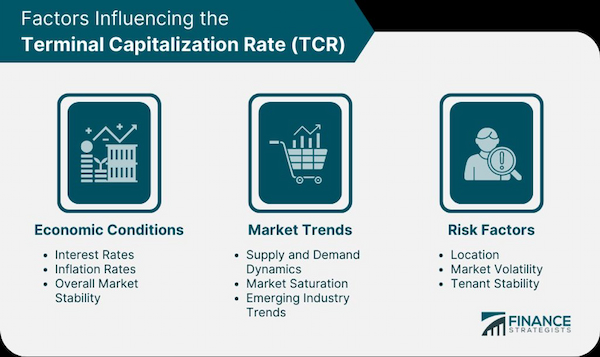
Market conditions play a pivotal role in shaping the cap rate for single family homes. These conditions are influenced by a variety of economic factors, including interest rates, employment rates, and overall economic health.
- Interest rates* have a direct impact on cap rates; as interest rates rise, the cost of borrowing increases, which can lead to a higher cap rate. Conversely, lower interest rates can decrease cap rates as cheaper borrowing costs make investments more attractive.
- Employment rates affect the stability of rental income, as higher employment means more people can afford to rent homes, potentially lowering cap rates through increased demand.
- The general economic health, including GDP growth and consumer confidence, can either bolster or dampen real estate markets, influencing cap rates accordingly.
Tip: Investors should closely monitor these market conditions to anticipate changes in cap rates and adjust their investment strategies accordingly.
Trends in Cap Rates for Single Family Homes
Trends in cap rates for single family homes can provide valuable insights into the current state of the real estate market. It’s important to closely monitor these trends to identify potential investment opportunities and assess market conditions. Understanding the fluctuations in cap rates over time can help investors make informed decisions about property acquisition and portfolio management. Additionally, analyzing the relationship between market trends and cap rates can reveal patterns that may influence investment strategies and risk assessment.
Evaluating Risk and Return
Risk Assessment in Cap Rate
When evaluating the risk associated with a specific property, it’s crucial to consider various factors such as location, market conditions, and property condition. Understanding the historical performance of similar properties in the area can provide valuable insights into potential risks.
Additionally, conducting a thorough financial analysis can help in assessing the potential return on investment. This analysis may include factors such as rental income, property appreciation, and operating expenses. Balancing the risk assessment with return expectations is essential for making informed investment decisions.
Tip: It’s important to remember that a low cap rate doesn’t necessarily indicate a low-risk investment. Factors such as property appreciation and potential for value-add opportunities should also be taken into account when evaluating risk and return.
Balancing Cap Rate with Return Expectations
When balancing cap rate with return expectations, it’s important to consider the long-term implications of the investment. This involves assessing the potential for appreciation in property value and the stability of rental income. Additionally, evaluating the risk-adjusted return can provide a more comprehensive view of the investment’s performance. It’s crucial to align cap rate with the desired risk tolerance and investment objectives.
Comparing Cap Rate with Other Metrics
Comparison with Gross Rent Multiplier
When comparing Cap Rate with other metrics, it’s important to consider the unique insights provided by each. While the Gross Rent Multiplier (GRM) offers a different perspective on property value, the Cap Rate focuses on the income generation potential. Here’s a quick comparison:
| Metric | Focus | Calculation |
|---|---|---|
| Cap Rate | Income | Net Operating Income / Property Value |
| GRM | Property Value | Property Value / Gross Rental Income |
It’s essential to understand the specific use cases and limitations of each metric, as they can complement each other in property analysis. Remember, the choice of metric depends on the investment goals and the nature of the real estate market.
Advantages and Limitations of Cap Rate
When evaluating the advantages and limitations of cap rate, it’s important to consider the quantitative and qualitative aspects of this metric. While cap rate provides a quick and simple way to assess the potential return on a property investment, it ignores the impact of debt financing and may have a limited scope in certain scenarios. It’s crucial to weigh these factors carefully when using cap rate as a decision-making tool. Here are some key points to consider:
- Ignores Debt Financing: Cap rate fails to account for debt financing or leverage used to purchase a property.
- Limited Scope: Cap rate may have a limited scope in assessing the potential return on certain types of properties or investment strategies.
It’s essential to recognize that cap rate is a valuable tool for initial property assessment, but it should be used in conjunction with other metrics and a thorough understanding of the specific investment context. As with any metric, it’s important to consider its limitations and use it judiciously to make well-informed investment decisions.
Cap Rate in Real Estate Investment Strategies

Incorporating Cap Rate in Investment Strategies
In real estate investment strategies, the cap rate plays a crucial role in evaluating the potential return on investment. It provides a quick and effective way to compare different properties based on their income-generating potential. Investors often use the cap rate to make informed decisions about which properties to pursue further. Additionally, the cap rate can be used to assess the risk associated with a particular property, helping investors balance their risk and return expectations.
When incorporating the cap rate in investment strategies, it’s important to consider various factors that can impact the cap rate. These factors may include the property’s location, market conditions, and the overall financial performance of the property. By analyzing these factors, investors can gain valuable insights into the suitability of a property for their investment portfolio.
Furthermore, it’s essential to understand that the cap rate is just one of the many metrics used in real estate investment analysis. Investors should carefully evaluate the cap rate in conjunction with other metrics such as the gross rent multiplier and the property’s potential for appreciation. This holistic approach enables investors to make well-informed decisions and develop robust investment strategies.
Cap Rate in Property Valuation
Cap Rate is a crucial metric in property valuation, providing investors with a quick and effective way to assess the potential return on investment. It helps in comparing different properties and making informed decisions about their suitability for investment. When incorporating Cap Rate in property valuation, it’s essential to consider the local market conditions and the property’s specific characteristics to arrive at a realistic assessment of its income potential and risk profile. This can be achieved through a thorough analysis of comparable properties and their Cap Rates, allowing investors to make well-informed investment decisions.
Conclusion
In conclusion, the ideal cap rate for single family homes is a crucial factor to consider when evaluating real estate investments. It is important to carefully analyze the cap rate in relation to the local market conditions and investment goals. By understanding the significance of the cap rate, investors can make informed decisions that align with their financial objectives and risk tolerance.
Frequently Asked Questions
What is Cap Rate and why is it important for single family homes?
Cap Rate, or capitalization rate, is a measure of the potential return on investment for a single family home. It is important because it helps investors assess the profitability and risk associated with the property.
How is Cap Rate calculated for single family homes?
Cap Rate is calculated by dividing the property’s net operating income (NOI) by its current market value or purchase price. The formula is: Cap Rate = (NOI / Property Value) x 100%.
What factors affect the Cap Rate of single family homes?
Several factors can affect the Cap Rate, including location, property condition, rental market trends, operating expenses, and financing terms.
What is considered a high Cap Rate for single family homes?
A high Cap Rate for single family homes is typically above 8%. This indicates a higher potential return on investment relative to the property’s value.
What is considered a low Cap Rate for single family homes?
A low Cap Rate for single family homes is generally below 4%. This suggests a lower potential return on investment compared to the property’s value.
How does Cap Rate compare to Gross Rent Multiplier (GRM) in real estate analysis?
Cap Rate and Gross Rent Multiplier (GRM) are both used to evaluate the investment potential of real estate properties. While Cap Rate focuses on the property’s income relative to its value, GRM assesses the relationship between the property’s price and its rental income.
What are the advantages of using Cap Rate for single family homes?
The advantages of using Cap Rate include its simplicity, ability to compare different properties, and its focus on income generation, making it a valuable tool for investment analysis.
What are the limitations of Cap Rate for single family homes?
Limitations of Cap Rate include its reliance on accurate income and expense data, potential variations in property values, and its inability to account for financing differences and individual investment goals.
